
Mushroom Grow Kits Australia: The Complete Beginner's Guide
Mushroom grow kits make growing mushrooms at home far simpler by combining the essential materials into one beginner-friendly setup. Instead of preparing grain, substrate and specialised equipment separately, a quality kit gives you a straightforward starting point for learning how fungi colonise, fruit and develop.
Whether you’re completely new to mycology or looking for a more convenient way to grow gourmet mushrooms at home, this guide covers the entire process — from what’s inside a mushroom grow kit to colonisation, fruiting, harvesting and subsequent flushes.
What Is a Mushroom Grow Kit?
A mushroom grow kit is a prepared growing system designed to simplify mushroom cultivation.
Rather than sourcing and preparing every component individually, grow kits typically provide the growing medium and materials needed to establish and fruit a mushroom culture.
The exact contents vary depending on the type of kit. MycoMind kits are designed to make the process approachable for beginners while still introducing the fundamentals of mushroom cultivation.
A typical setup may involve:
A sterilised grow bag
Grain or another nutrient source
Mushroom substrate
Filter patch for gas exchange
Self-healing injection port
Growing instructions
Some setups may also require a compatible culture or spore product depending on the mushroom species and applicable laws.
How Do Mushroom Grow Kits Work?
To understand a grow kit, it helps to understand the mushroom life cycle.
Mushrooms are only the visible fruiting bodies of a much larger fungal organism.
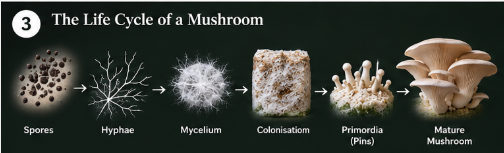
The process begins with fungal material establishing itself and developing a network of microscopic threads called hyphae. As these spread, they form a larger network known as mycelium.
Mycelium grows through its food source, breaking down and absorbing nutrients. Once sufficiently established and exposed to suitable environmental conditions, the fungus may begin forming tiny structures known as primordia, followed by pins and eventually mature mushrooms.
In simple terms:
Fungal material → Hyphae → Mycelium → Colonisation → Primordia → Pins → Mushrooms
For a closer look at the biology behind this process, read our Life Cycle of a Mushroom: From Spore to Fungi guide:
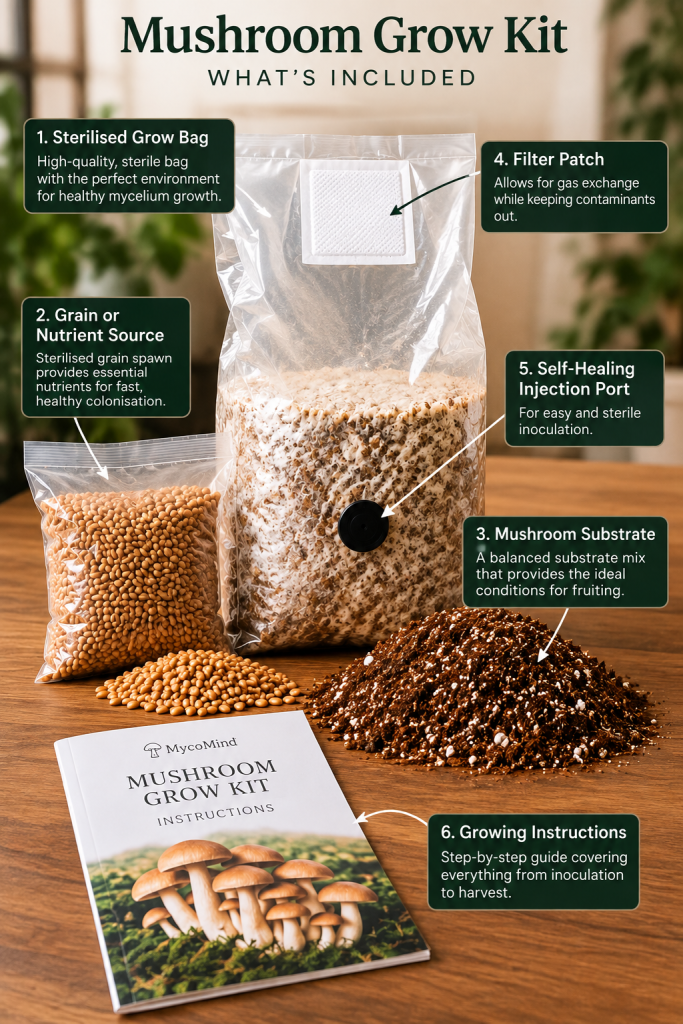
What's Included in a MycoMind Mushroom Grow Kit?
MycoMind mushroom grow kits are designed to provide the core materials needed in one convenient setup.
Depending on the kit, this can include:
Sterilised grow bag
A purpose-made bag with a filter patch that allows gas exchange while helping protect the contents from outside contaminants.
Sterilised grain
Provides a nutrient-rich medium for mycelium to establish and spread through.
Mushroom substrate
Provides the environment and material the fungus uses as it continues developing.
Self-healing injection port
Allows compatible material to be introduced without opening the grow bag.
Preparation materials
Selected kits may include supporting items such as alcohol swabs.
Step-by-step instructions
Clear guidance helps beginners understand each major stage without making the process unnecessarily complicated.
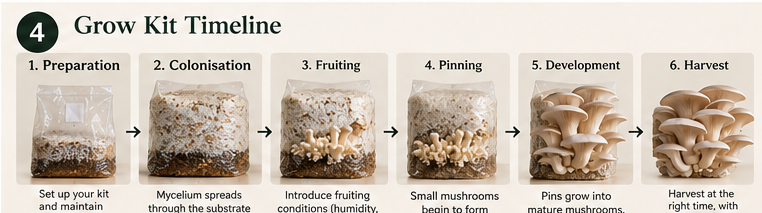
The Mushroom Grow Kit Timeline
One of the biggest mistakes beginners make is expecting mushrooms to appear immediately.
Most of the important work initially happens where you can’t see it.
A grow kit generally progresses through several stages:
1. Preparation
The kit and required materials are prepared according to the instructions supplied for the species being grown.
Clean handling is important because unwanted microorganisms can compete with the intended fungal culture.
2. Colonisation
Mycelium begins spreading through the available growing medium.
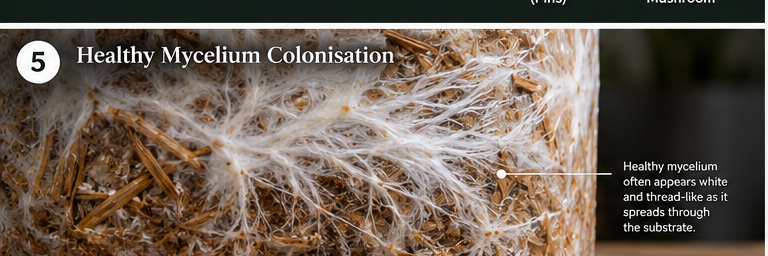
Healthy mycelium often develops into a visible network throughout the kit as colonisation progresses.
This stage requires patience. Different mushroom species and environmental conditions can produce very different colonisation times.
3. Fruiting
Once sufficiently colonised, suitable environmental conditions can encourage the fungus to begin producing fruiting bodies.
Humidity, temperature, moisture, light and fresh air can all influence fruiting, with ideal conditions varying between species.
4. Pinning
Small mushroom formations begin appearing.
These early mushrooms are commonly called pins.
5. Mushroom Development
Under suitable conditions, pins continue developing into mature fruiting bodies.
6. Harvest
Once the mushrooms reach the appropriate stage of maturity for the species, they can be harvested.
Some healthy mushroom cultures can subsequently produce additional rounds of mushrooms known as flushes.
👉 Read this article for in-depth info: Mushroom Grow Kit Timeline: What to Expect at Every Stage
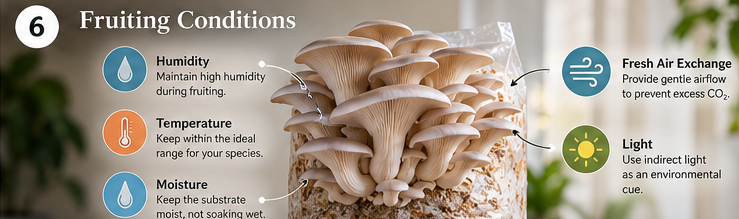
Mushroom Fruiting Conditions
Once colonisation is complete, the focus shifts toward fruiting.
Different mushroom species prefer different environments, but several factors commonly influence fruiting:
Humidity — helps maintain an appropriately moist environment.
Fresh air exchange — prevents excessive carbon dioxide accumulation around developing mushrooms.
Temperature — different species have different preferred fruiting ranges.
Moisture — the substrate needs enough available moisture to support mushroom development.
Light — many cultivated mushroom species use light as an environmental cue, although mushrooms do not photosynthesise like plants.
The key is balance.
More humidity, more water or more airflow isn’t automatically better. The goal is to provide conditions appropriate for the mushroom species you’re growing.
👉 Read Next: Mushroom Fruiting Conditions Explained: Humidity, Temperature, Light & Fresh Air
Humidity vs Moisture: What's the Difference?
These terms are often confused.
Humidity refers to moisture in the surrounding air.
Substrate moisture refers to water available within the growing material itself.
A grow kit can therefore have high humidity while the substrate itself becomes too dry — or contain plenty of moisture while the surrounding environment isn’t ideal.
Understanding the difference makes troubleshooting much easier.
How Often Should You Mist a Mushroom Grow Kit?
There isn’t one misting schedule that works for every mushroom kit.
How much moisture is required depends on the species, grow-kit design, substrate, airflow, temperature and surrounding humidity.
Instead of blindly following a fixed schedule, pay attention to the conditions inside the fruiting environment and follow the instructions provided for your specific kit and species.
Overwatering can create problems just as easily as allowing a growing environment to become excessively dry.
👉 Your next read: How Often Should You Mist a Mushroom Grow Kit?
Why Fresh Air Exchange Matters
Fungi respire, meaning they consume oxygen and release carbon dioxide.
During fruiting, appropriate fresh air exchange helps prevent excessive carbon dioxide from accumulating around developing mushrooms.
However, excessive airflow can also dry the fruiting environment.
The objective isn’t maximum airflow — it’s appropriate air exchange while maintaining suitable humidity and moisture.
👉 Read More: Fresh Air Exchange for Mushroom Growing Explained
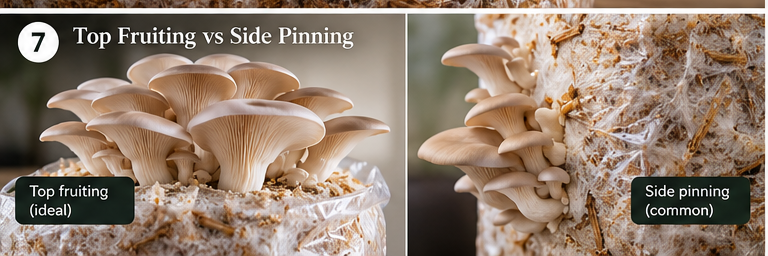
Why Are Mushrooms Growing Against the Side of the Bag?
Side pinning is extremely common in mushroom grow bags.
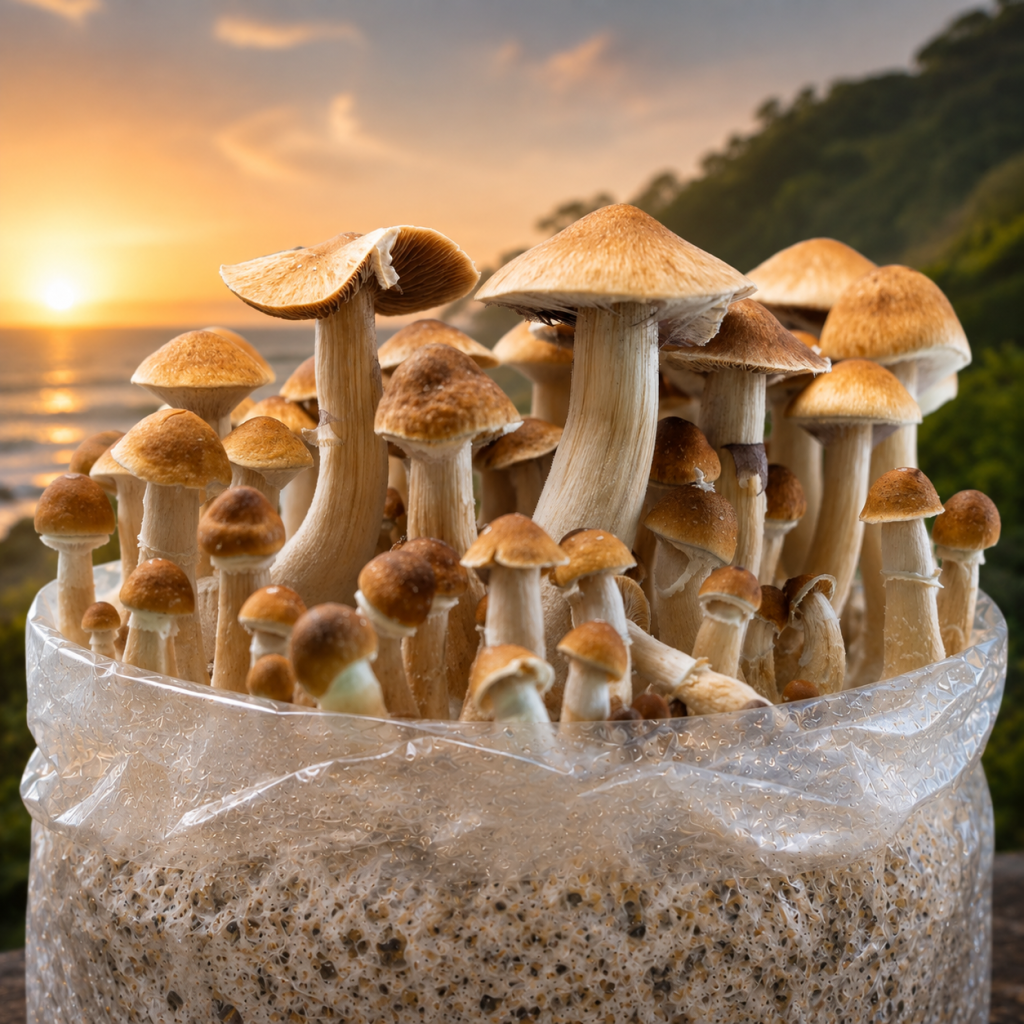
Mushrooms develop where environmental conditions favour fruiting. Small spaces between the substrate and grow bag can sometimes create a favourable microclimate, encouraging pins to form along the sides rather than exclusively on the exposed surface.
It doesn’t necessarily mean something has gone wrong.
Understanding surface conditions, humidity and the microclimate around the substrate can help explain why mushrooms choose particular areas to fruit.
Why Isn't My Mushroom Grow Kit Fruiting?
A fully colonised kit doesn’t always produce mushrooms immediately.
Delayed fruiting can be influenced by:
Temperature
Humidity
Moisture availability
Fresh air exchange
Species characteristics
Colonisation progress
General health of the mycelium
Sometimes the answer is simply patience.
Other situations require checking the growing environment and looking for obvious signs of stress, dryness or contamination.
Mushroom Grow Kit Contamination
Contamination is one of the most important things new mushroom growers should learn to recognise.
Mushroom substrates are nutrient rich, which means other microorganisms can also take advantage of them.
Potential warning signs can include unusual colours, unexpected textures, abnormal growth or unpleasant odours.
Not every colour change is contamination, however, and mycelium itself can change appearance depending on its condition and species.
When contamination is genuinely suspected, avoid unnecessarily opening or disturbing the grow kit.
👉 Next Read: Mushroom Grow Kit Contamination: Identification & Prevention Guide
When Are Mushrooms Ready to Harvest?
The correct harvest point depends on the mushroom species.
Different species develop different caps, stems, gills, pores and other structures, so there isn’t one visual rule that applies to every mushroom.
This is why species-specific information is important.
Rather than harvesting according to size alone, learn the normal developmental stages of the mushroom you’re growing.
What Is a Mushroom Flush?
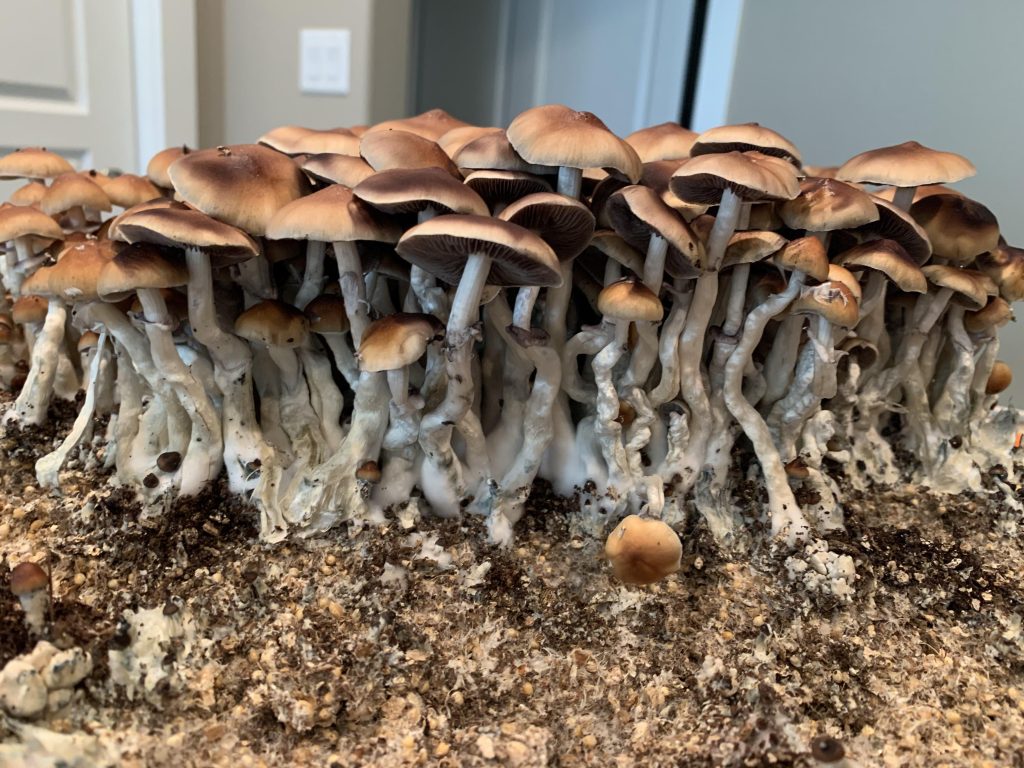
A flush is a group of mushrooms that develops and matures around the same period.
After one flush is harvested, healthy mycelium may sometimes produce another.
These are generally referred to as:
First flush → Second flush → Third flush
The number and size of flushes vary significantly depending on the mushroom species, genetics, substrate, available nutrients, moisture and overall health of the culture.
Later flushes aren’t guaranteed, but understanding the process can help you get more from a healthy grow kit.
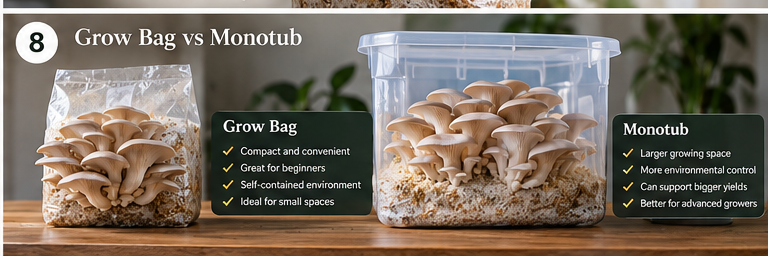
Grow Bag vs Monotub
Grow bags and monotubs are two different approaches to mushroom cultivation.
A grow bag provides a compact, self-contained environment and is particularly convenient for beginners.
A monotub provides a larger fruiting chamber that can offer more room and control but generally requires additional setup and environmental management.
Neither is automatically better.
The right option depends on the species, experience level, available space and type of cultivation project.
MycoMind also stocks mushroom-growing accessories for growers looking to expand their setup.
👉 Browse Mushroom Grow Kit Accessories.
👉 Next Read: Grow Bag vs Monotub: Which Mushroom Growing Method Is Right for You?
Spore Syringes, Spore Prints & Liquid Culture
As you explore mushroom cultivation and mycology, you’ll encounter several different forms of fungal material.
A spore syringe contains microscopic spores suspended in sterile liquid.
A spore print is a collection of spores deposited from a mature mushroom.
Liquid culture contains living mycelium suspended in a nutrient solution.
These materials aren’t interchangeable and can have very different uses in microscopy, taxonomy, research and legal cultivation.
For a simple breakdown, read:
👉 Spore Syringes vs Liquid Culture: What’s the Difference?
You can also explore MycoMind’s research collections:
Always check the laws that apply to the particular species and material in your jurisdiction before purchasing or using fungal cultures or spores.
Common Mushroom Grow Kit Mistakes
Most beginner problems come down to a handful of fundamentals.
Common mistakes include:
Constantly changing the growing environment
Providing inappropriate moisture levels
Allowing the substrate to become excessively dry
Providing too little or excessive airflow
Ignoring species-specific temperature requirements
Poor hygiene when handling equipment
Mistaking normal mycelial changes for contamination
Expecting mushrooms to develop immediately
Harvesting at an inappropriate stage
Mushroom cultivation becomes much easier once you understand what the fungus is actually doing at each stage.
👉 Read: Common Mushroom Grow Kit Mistakes & How to Avoid Them
Are Mushroom Grow Kits Good for Beginners?
Grow kits are one of the easiest ways to learn the fundamentals of mushroom cultivation because much of the preparation has already been completed.
Instead of mastering every advanced cultivation technique immediately, beginners can focus on understanding the key biological stages:
Colonisation → Fruiting → Pinning → Development → Harvest
Once you understand those stages, concepts such as substrates, grain spawn, sterile technique, fresh air exchange and mycelial biology become much easier to explore.
Mushroom Grow Kit FAQs
How long does a mushroom grow kit take?
There is no universal timeline. Growth speed varies according to mushroom species, environmental conditions, genetics and the stage at which the grow kit begins.
Do mushroom grow kits need light?
Many mushroom species respond to light as an environmental cue during fruiting, but fungi don’t use light for photosynthesis like plants. Lighting requirements vary between species.
Do mushroom grow kits need fresh air?
Appropriate gas exchange is important throughout fungal growth, while fresh air exchange becomes particularly relevant during fruiting. The amount required depends on the species and growing environment.
Can a mushroom grow kit produce more than once?
Some healthy mushroom cultures can produce multiple flushes. The number and size of subsequent flushes depend on species, substrate, moisture, nutrients and the health of the mycelium.
Why is my mushroom grow kit growing mushrooms on the side?
Side pinning commonly occurs when the small gap between the substrate and grow bag creates favourable fruiting conditions. It doesn’t automatically mean anything is wrong with the kit.
What’s the difference between mycelium and a mushroom?
Mycelium is the larger network of fungal hyphae growing through a substrate. The mushroom is the reproductive fruiting body produced by that fungal network.
For a deeper explanation, read our Life Cycle of a Mushroom guide
Start Exploring Mushroom Cultivation
Mushroom cultivation doesn’t need to be complicated.
Once you understand colonisation, mycelium, fruiting conditions, moisture and fresh air exchange, the different stages of a mushroom grow kit become much easier to recognise and manage.
MycoMind is building an Australian resource for mushroom growing, foraging and fungi education, with beginner-friendly products and straightforward guides designed to make mycology easier to understand.