Life Cycle of a Mushroom: From Spore to Fungi
Mushrooms might seem to appear out of nowhere. One day there’s nothing, the next there’s a perfectly formed mushroom pushing through the forest floor.
But beneath the surface, fungi have been quietly working away through one of nature’s most fascinating life cycles.
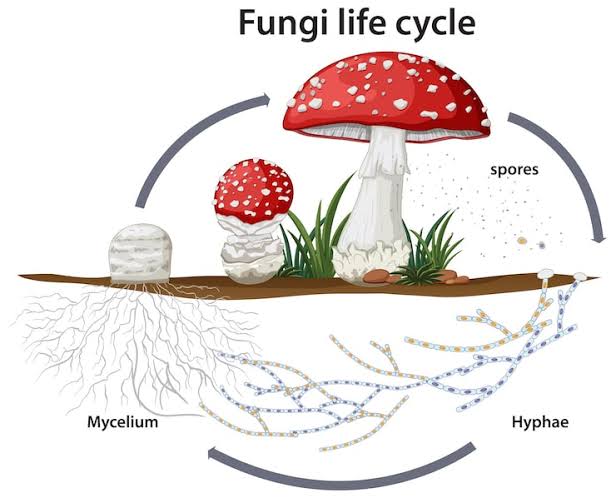
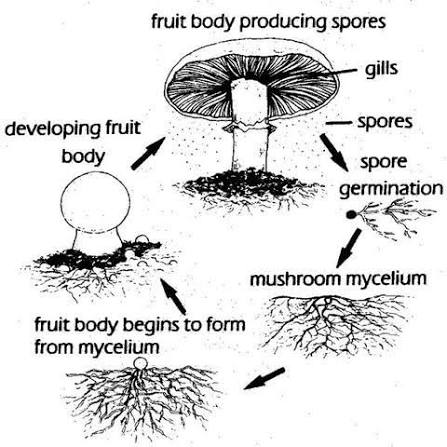
From a microscopic spore to a sprawling underground network and eventually a fruiting mushroom, here’s how the mushroom life cycle works.
Stage 1: It All Starts With a Spore
Every mushroom begins with something incredibly small: a spore.
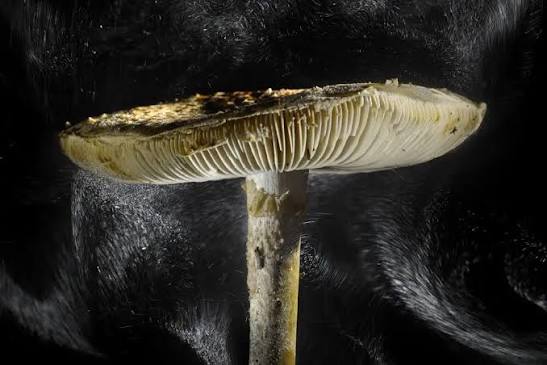
Spores are essentially the fungal equivalent of seeds—although biologically, they work quite differently. A mature mushroom can release millions or even billions of microscopic spores into the surrounding environment.
These spores are carried by wind, water, animals and other forces until, with a little luck, they land somewhere suitable.
And considering how many spores are released, fungi clearly believe in the “throw enough darts at the board” strategy.
If you want to buy your own spores, Shop Here at Mycomind. 🙂
Stage 2: Spores Germinate Into Hyphae
When environmental conditions are suitable, a viable spore can germinate and begin producing tiny thread-like structures called hyphae.
Hyphae are microscopic fungal filaments that grow outward in search of nutrients.
Individual strands might not look particularly impressive, but collectively they can develop into something much bigger.
That brings us to mycelium.
Stage 3: The Mycelium Network Develops
As compatible fungal structures connect and grow, they form a branching network known as mycelium.
This is where things get interesting.
The mushroom we see above ground is only the reproductive structure of the fungus. The mycelium is the larger underlying organism, spreading through soil, wood, leaf litter or other organic material.
As it expands, mycelium releases enzymes that break down complex organic matter, allowing the fungus to absorb nutrients.
In forests, fungal networks can become enormous and play important ecological roles in decomposition and nutrient cycling.
Think of the mushroom as the apple. The mycelium is the tree.
Stage 4: Primordia Begin to Form
Once a mature mycelial network encounters suitable environmental conditions, it may begin producing tiny structures called primordia.
These are essentially baby mushrooms.
At first, they can look like tiny knots or bumps emerging from the mycelium. As development continues, recognizable mushroom structures begin taking shape.
This stage is often called pinning because the young mushrooms can resemble tiny pins.
Small, but ambitious.
Stage 5: The Mushroom Fruits
Primordia can develop into the familiar fruiting bodies we recognise as mushrooms.
Depending on the species, the mushroom may develop a stalk, cap, gills, pores or other specialised structures.
Its primary biological mission isn't to look pretty in a forest photograph.
It's reproduction.
Once mature, the mushroom produces and releases new spores, giving the fungus another opportunity to spread into new environments.
And just like that, the cycle starts again.

The Cycle Never Really Stops
The mushroom life cycle is a brilliant reminder that what we see above ground is only a small part of what's happening.
Spore → Hyphae → Mycelium → Primordia → Mushroom → Spores
While the fruiting body may only survive for a relatively short period, the mycelium beneath it can persist much longer when conditions allow.
So next time you spot a mushroom growing from a log or popping through the forest floor, remember: you're not looking at the whole organism.
You're looking at the grand finale of an incredible biological process that's been unfolding largely out of sight.
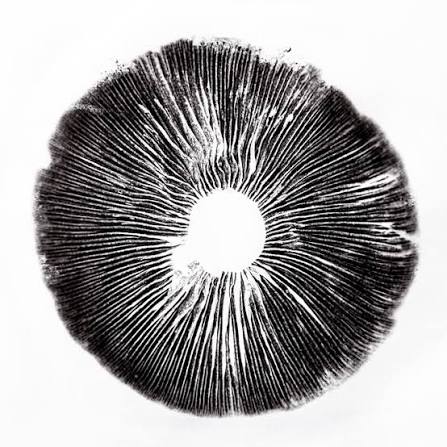
Interested in buying your own Spore Syringes? Mycomind offers a wide range of strains you can choose from. There is also a range of Spore Prints for those who want to make their own spore syringes.
Curious to learn more about fungi? Explore our extensive Mushroom Growing Guide, browse beginner-friendly Mushroom Grow Kits, or discover the fascinating world of fungi through our growing library of cultivation and foraging resources.
Thanks for reading, and I hope you found this guide helpful. At MycoMind, we're passionate about making mushroom growing, foraging, and fungi education accessible to every Australian.